The landscape of artificial intelligence has reached a monumental tipping point. Google Gemini has officially crossed the 1 billion monthly active user threshold, solidifying its position as Google’s fastest-growing product in history and its 14th platform to achieve this scale. This milestone transforms how consumers interact with artificial intelligence and fundamentally redefines the ongoing artificial intelligence market share battle between search giants and standalone frontier model developers.
Google Gemini Hits 1 Billion Users: What It Means for the AI Race Against ChatGPT
Artificial intelligence is no longer an experimental luxury for early adopters—it has become a core utility woven into the fabric of everyday digital life. The official announcement that Google Gemini reached over 1 billion monthly active users marks a dramatic turning point in global AI adoption. From seamless Android operating system integration to deep capabilities within Google Workspace, Google Gemini has transformed from a foundational model into a ubiquitous digital ecosystem.
While OpenAI’s ChatGPT led the initial generative AI boom, the rapid scaling of Google Gemini demonstrates the unmatched power of infrastructure, distribution networks, and hardware-level AI agent deployment. As businesses, digital marketers, and consumers adapt to this rapid shift, understanding how Google Gemini reshapes conversational AI, search behavior, and digital marketing strategies is vital for long-term growth.
The Massive Milestone: How Google Gemini Reached 1 Billion Active Users
The growth trajectory of Google Gemini stands out as one of the most aggressive scaling events in consumer technology history. While iconic services like Gmail took nearly 14 years to cross the 1 billion user mark, Google Gemini achieved this scale in record time.
| Key Performance Metric | Impact & Data Benchmark |
| Total Monthly Active Users | 1+ Billion Active Users Across Web & Mobile Apps |
| Voice Interaction Rate | 63% of users interact using direct voice inputs |
| Daily Image Generation | Over 150 million visuals generated daily |
| Cross-App Automation | Deep integration across 40+ native Android applications |
| iOS Ecosystem Reach | Over 100 million active monthly users on Apple iOS |
This massive surge highlights the core strength of Google Gemini: context-aware multimodal AI. Users aren’t merely typing text prompts into a blank box. They are leveraging multimodal inputs—attaching documents, scanning physical environments via live video feeds, uploading images, and utilizing natural voice commands to solve complex tasks instantly.
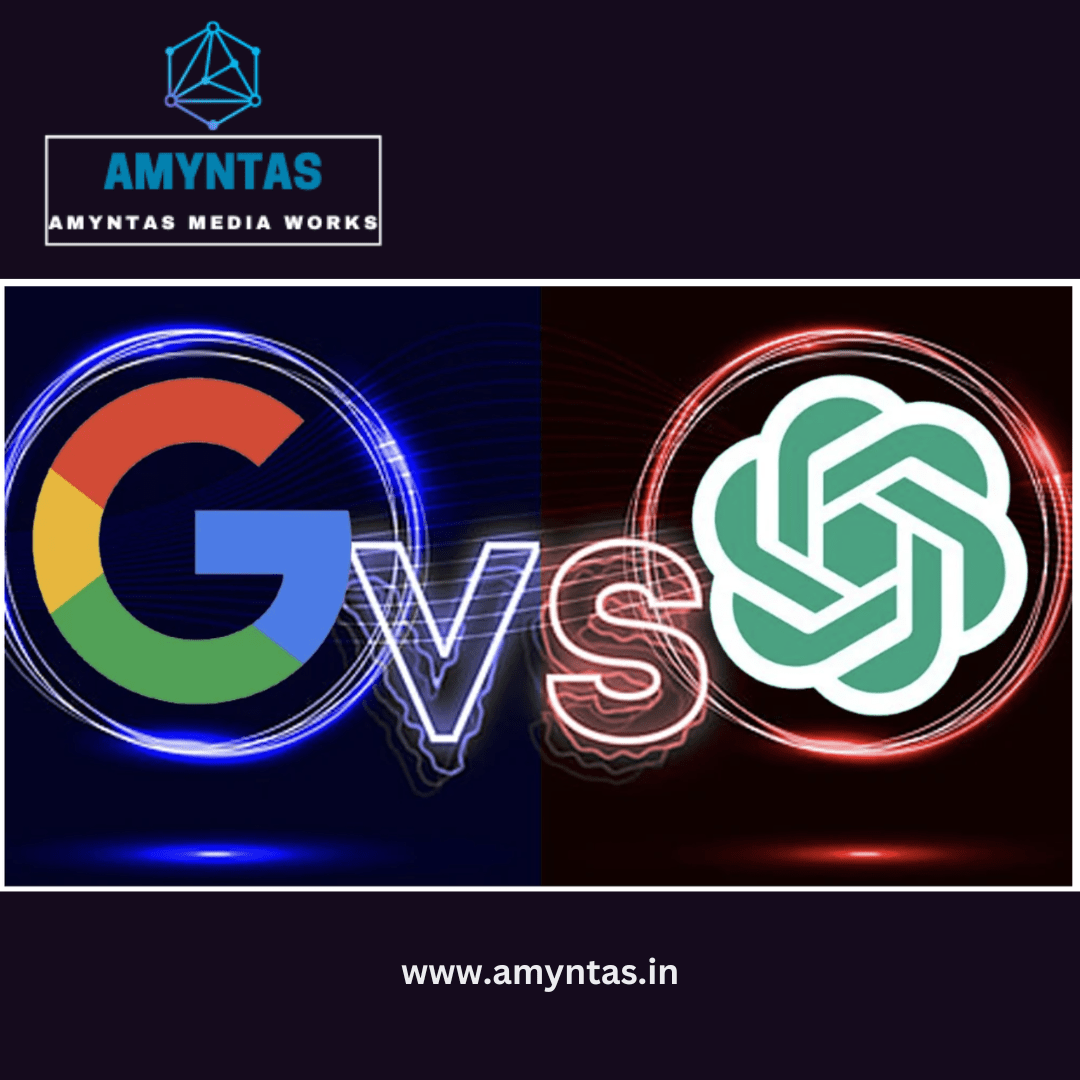
Google Gemini vs. ChatGPT: The Escalating Battle for AI Dominance
The global battle between Google Gemini and OpenAI’s ChatGPT has evolved beyond model architecture and raw benchmarks. It is now a battle over native accessibility, user habituation, and workflow integration.
Distribution Architecture and Reach
ChatGPT relies primarily on direct web visits, standalone mobile downloads, and third-party API integrations. In contrast, Google Gemini is natively embedded across Android devices, Chrome browsers, Google Workspace (Docs, Gmail, Drive), and Google Search. This broad ecosystem placement allows Google Gemini to offer immediate assistance without requiring users to switch applications.
Multimodal Processing Capabilities
From its inception, Google Gemini was natively engineered as a multimodal model capable of processing text, code, audio, image, and video data seamlessly. Features like Gemini Live allow users to conduct conversational visual and voice interactions in real time, making Google Gemini an indispensable tool for students, professionals, and developers.
Enterprise and Personal Ecosystem Control
While ChatGPT excels in specialized text synthesis and direct code execution, Google Gemini acts as a personal digital agent. By connecting directly to a user’s Google Drive, calendar, maps, and email accounts, Google Gemini delivers personalized, hyper-contextualized results that standalone LLMs struggle to match.
Why Google Gemini reaching 1 Billion Users Changes Digital Marketing & SEO
The rapid expansion of Google Gemini changes how consumers search for information, compare brands, and buy products online. Traditional Search Engine Optimization (SEO) focused heavily on keyword density, backlinks, and desktop-first content design. With Google Gemini powering search queries and conversational assistants, brands must transition toward Answer Engine Optimization (AEO) and AI Visibility Optimization.
The Rise of Zero-Click Conversational Searches: Users are asking Google Gemini detailed, long-tail questions and expecting immediate, structured answers rather than navigating blue links.
Context-Driven Visual and Multimodal Search: With over 150 million daily AI images generated and millions scanning real-world physical objects through camera feeds, visual optimization is vital.
Hyper-Localized Conversational Commerce: Users leverage Google Gemini for localized recommendations, pricing breakdowns, and service reviews. Businesses without strong local structured data risk becoming invisible in AI-generated answers.
To maintain digital visibility in an era dominated by Google Gemini, brands need specialized agency partners who understand conversational AI dynamics, entity mapping, and predictive content optimization.
Architectural Breakthroughs: The Engineering Powering Google Gemini at Billion-User Scale
Crossing the 1 billion monthly active user threshold is not merely a marketing triumph; it is a monumental feat of systems engineering and distributed computing infrastructure. Scaling an advanced large language model (LLM) to serve over 1,000,000,000 global users concurrently requires solving computational bottlenecks, latency spikes, and massive energy demands that would cripple standard server networks.
Custom Tensor Processing Units (TPU v5p and Trillium)
The primary engine driving Google Gemini at scale is Google’s proprietary hardware accelerator infrastructure. Unlike competitors who rely almost exclusively on third-party GPU clusters, Google Gemini was natively trained and served using custom-designed Tensor Processing Units (TPUs).
The deployment of TPU v5p and the latest Trillium chips has allowed Google Gemini to achieve:
4.7x Increase in Compute Performance: Training large-scale multimodal models in a fraction of the time required by previous generations.
67% Higher Energy Efficiency: Reducing operational carbon footprints while handling billions of complex inference calls daily.
Optical Circuit Switching (OCS): Dynamic routing of model workloads across thousands of interlinked TPU chips, preventing network bottlenecks during global peak traffic hours.
Sparse Mixture of Experts (MoE) Architecture
To serve Google Gemini efficiently across varying device constraints, Google implemented a Sparse Mixture of Experts (MoE) framework. Rather than activating the entire neural network for every single query, Google Gemini dynamically routes specific sub-tasks to specialized parameter sub-networks (“experts”).
Query Routing: A lightweight gating network evaluates whether a user prompt requires creative writing, code synthesis, math reasoning, or image comprehension.
Selective Parameter Activation: Only the precise neural pathways required for that task are loaded, lowering compute costs per token while keeping response times under sub-second thresholds.
On-Device Quantization: Compact variants (such as Gemini Nano) run locally on smartphone hardware, handling sensitive user data locally without requiring cloud round-trips.
The Shift from Chatbots to Autonomous AI Agents in Enterprise Workflows
The achievement of 1 billion active users signifies a major psychological and operational shift: users no longer view Google Gemini as a mere conversational text generator, but as a fully functioning autonomous agent capable of orchestrating complex multi-step workflows.
Defining the Autonomous AI Agent Paradigm
In the early days of generative AI, interaction followed a simple input-output loop. A user typed a prompt, and the AI generated text. Google Gemini breaks this limitation by executing programmatic actions across connected platforms through function calling and tool usage APIs.
Real-World Business Use Cases Executed by Google Gemini
1. Automated Supply Chain & Logistics Coordination
Enterprises leverage Google Gemini to scan invoices, monitor inventory spreadsheets in Google Sheets, detect delivery delays across logistics portals, and draft vendor clarification emails automatically within Gmail—all without manual human data entry.
2. Dynamic Software Code Refactoring and DevOps Pipeline Execution
Software developers use Google Gemini inside Google Cloud Vertex AI to audit legacy code repositories, perform automated security vulnerability scans, generate comprehensive unit tests, and commit pull requests directly to GitHub or GitLab.
3. Cross-Platform Financial Data Analysis
Financial analysts utilize the massive million-token context window of Google Gemini to ingest quarterly earnings call audio, balance sheet PDFs, and market trend forecasts simultaneously, outputting complete risk assessment reports in seconds.
The Evolution of Search: How Google Gemini Powers Generative AI Overviews
Search engine behavior is undergoing its most radical transformation since the invention of the hyperlink. With Google Gemini deeply embedded into Google’s core search engine infrastructure through AI Overviews (formerly SGE), the traditional list of 10 organic blue links is transitioning into an interactive, synthetic synthesis engine.
Key Components of Google Gemini-Powered AI Overviews
Multimodal Synthesized Answers: Instead of forcing the searcher to visit five different websites to piece together information, Google Gemini reads hundreds of pages in real time, distilling the consensus into a single structured response with citation cards.
Complex Multi-Step Query Understanding: Users can now submit queries containing multiple intent layers (e.g., “Find me a pet-friendly boutique hotel in South Goa with high-speed Wi-Fi under ₹8,000 per night, and show me nearby vegetarian cafes”). Google Gemini processes all constraints simultaneously.
Conversational Follow-Ups in Search: If the initial AI Overview doesn’t answer every detail, users can refine their search conversationally without restarting their query from scratch.
Strategic Playbook: How Brands Must Adapt to Generative AI Search Engine Dynamics
As Google Gemini answers an increasing percentage of web queries directly on the Search Engine Results Page (SERP), brands face the threat of declining organic zero-click referral traffic unless they overhaul their digital marketing playbook.
1. Shift Priority from Keyword Volume to Entity Relationship Mapping
Search engines no longer match exact string keywords; they understand real-world “Entities” (people, places, concepts, businesses) and the semantic relationships between them.
| Traditional SEO Approach | Google Gemini / AI-First Approach |
| Focuses on exact-match target keywords | Focuses on Entity Salience & Semantic Breadth |
| Optimizes meta tags and keyword density | Builds schema-backed Knowledge Graphs |
| Tracks desktop ranking position | Tracks AI Answer Inclusion & Citation Frequency |
| Target audience clicks through to blog | Target audience receives direct AI recommendation |
2. Implement Deep Schema Markup and Structured Data Arrays
To ensure Google Gemini accurately understands and cites your brand in generated answers, websites must implement rigorous JSON-LD structured data markup across every page layer:
Organization & Brand Schema: Clarifies who you are, what services you offer, and official social/web properties.
Product & Offer Schema: Provides real-time pricing, stock availability, and verified customer reviews directly to AI web scrapers.
FAQ & HowTo Schema: Delivers direct, structured answers that Google Gemini can easily extract into conversational AI panels.
3. Establish High Topical Authority Through First-Party Data & Expert Proof
Generative AI models are trained to avoid hallucinated information by heavily weighting content that displays high E-E-A-T (Experience, Expertise, Authoritativeness, and Trustworthiness). To be featured in Google Gemini answers:
Publish original case studies, proprietary data surveys, and original research.
Include clear author bios with verified industry credentials and linked professional profiles.
Ensure third-party media publications and trade journals cite your brand entities consistently.
Deep Dive: The Data Privacy, Governance, and Security Architecture of Google Gemini
As Google Gemini touches the data of over 1 billion consumers and thousands of enterprises, concerns surrounding data privacy, copyright compliance, and algorithmic bias have become top-tier corporate priorities.
Enterprise-Grade Data Isolation Policies
A primary reason enterprise organizations are adopting Google Gemini over third-party consumer tools is Google’s strict data isolation architecture:
No Training on Customer Workspace Data: Corporate documents created inside Google Workspace (Docs, Sheets, Drive) or processed via Google Cloud Vertex AI are never used to train public baseline models.
Customer-Managed Encryption Keys (CMEK): Organizations retain complete cryptographic ownership over their prompt histories and context files, ensuring regulatory compliance with standards such as GDPR, HIPAA, and ISO 27001.
Mitigating Hallucinations and Algorithmic Bias
Google employs advanced Safety Guardrails and Reinforcement Learning from Human Feedback (RLHF) coupled with real-time web grounding:
Grounding with Google Search: Before generating factual responses, Google Gemini cross-checks its probabilistic outputs against real-time data indexed in Google’s Knowledge Graph to reduce hallucinations.
Attribution Verification: Advanced factual verification algorithms check generated assertions against primary sources, assigning confidence scores before rendering final answers to users.
The Monetization Matrix: How Google Plans to Capitalize on 1 Billion Gemini Users
Scaling an AI ecosystem to 1 billion active users requires an immensely expensive infrastructure investment. To generate sustainable returns, Google is executing a multi-tiered global monetization strategy.
1. High-Margin Consumer Subscriptions (Gemini Advanced)
By offering a premium tier bundled with Google One storage subscriptions, Google converts power users into recurring monthly subscription revenue. Gemini Advanced subscribers gain priority access to cutting-edge models, larger context windows (up to 2 million tokens), and early access to experimental agentic features.
2. Enterprise Workspace Licensing (Gemini for Google Workspace)
Google monetizes corporate users by offering Google Gemini as a per-user monthly add-on inside Google Workspace. Employees gain AI assistance for drafting proposals, summarizing long email threads, generating automated presentation decks, and analyzing sales spreadsheets.
3. Developer & Enterprise API Consumption via Google Cloud Vertex AI
Developers pay on a usage-based, per-token pricing model to build custom software applications on top of Google Gemini APIs. Enterprise clients build custom AI assistants, internal customer support agents, and automated data processing engines hosted securely on Google Cloud.
4. Native Sponsored Suggestions & AI Commercial Integrations
As consumer search behavior transitions to conversational AI, Google is introducing commercial ad placements directly within AI-generated responses. When users ask Google Gemini for travel itineraries, software recommendations, or local insurance policies, relevant sponsored links and merchant listings appear seamlessly alongside organic recommendations.
Future Outlook: What Lies Ahead for Google Gemini and the Global Artificial Intelligence Landscape
The achievement of 1 billion active users is not the finish line—it is the baseline for the next major decade of computing. As the competitive gap between OpenAI, Anthropic, Meta, and Google continues to shift, several key technological transformations will define the future of Google Gemini:
1. Continuous Context Windows & Unlimited Conversational Memory
Future iterations of Google Gemini will offer practically infinite context windows, allowing users to upload entire corporate databases, decades of email archives, or code libraries into a single active session without losing context or experiencing performance degradation.
2. Embodied AI and Robotics Integration
Google’s DeepMind division is leveraging Google Gemini as the primary reasoning brain for embodied robotics. Models like RT-2 (Robotics Transformer) allow physical robots to interpret natural language voice commands, visually analyze real-world physical environments, and perform complex spatial manipulation tasks in homes and factories.
3. Hyper-Personalized Proactive AI Companionship
Instead of waiting for users to input explicit prompts, Google Gemini will evolve into a proactive digital manager. By analyzing ambient calendar data, flight schedules, traffic patterns, and personal health metrics, Google Gemini will proactively suggest actions—such as rebooking delayed flights, ordering groceries before household inventory runs out, or summarizing missed meetings automatically.
Leveraging AI Innovation: Why Partnering with Amyntas Media Works in Gurgaon Leads the Way
Navigating the AI revolution requires moving beyond legacy SEO strategies. Amyntas Media Works in Gurgaon delivers cutting-edge digital marketing solutions designed specifically for the AI-first search environment.
Advanced Answer Engine Optimization (AEO): Amyntas Media Works structures brand content to ensure maximum visibility inside Google Gemini responses, ChatGPT conversational results, and AI search snapshots.
Data-Driven Performance Marketing: Utilizing predictive AI tools, Amyntas Media Works builds laser-targeted campaigns that reach audiences on the exact platforms they use.
Localized Authority Building: Positioned in Gurgaon’s major corporate hub, Amyntas Media Works specializes in hyper-local optimization, entity building, and online reputation management.
Future-Proof Digital Content Creation: Amyntas Media Works produces high-intent, schema-optimized multimedia content engineered to rank within conversational AI tools like Google Gemini.
#Google Gemini #Generative AI #Artificial Intelligence #Chat GPT #AI In Marketing #AEO Strategy #Answer Engine Optimization #Google AI #Multimodal AI #Digital Marketing Gurgaon #Amyntas Media Works #Gurgaon Digital Agency #AI Search #Google Workspace AI #Android AI #Gemini Live #Voice Search Optimization #Search Engine Optimization #Tech Innovation #AI Chatbots #Future Of Search #SEO Strategy #Zero Click Search #AI Content Strategy #AI Ecosystem #Machine Learning #Conversational AI #Tech News 2026 #Digital Growth #Content Marketing #Local SEO Gurugram #AI Agent Integration
FAQ
Q1: How did Google Gemini reach 1 billion users so quickly compared to ChatGPT?
Answer: Google Gemini achieved the 1 billion monthly active user milestone by leveraging Google’s global distribution ecosystem. Unlike standalone AI chatbots, Google Gemini is built directly into Android mobile operating systems, Google Workspace applications (Gmail, Docs, Drive), Chrome web browsers, and Google Search interfaces. This frictionless accessibility across billions of existing connected devices fueled the fastest product user expansion in Google’s history.
Q2: What are the main feature differences between Google Gemini and ChatGPT for daily tasks?
Answer: Google Gemini stands out for its native ecosystem integration, multimodal voice and camera capabilities (via Gemini Live), real-time web access, and native ability to execute actions across more than 40 popular mobile apps. ChatGPT excels in direct creative writing, advanced code interpreter execution, and standalone conversational reasoning. However, Google Gemini offers stronger practical utility for users reliant on Google Cloud, Workspace, and Android platforms.
Q3: How does Google Gemini reaching 1 billion users impact business SEO and digital marketing strategies?
Answer: The rise of Google Gemini shifts user search behavior from traditional keyword-matching queries to zero-click, conversational AI interactions. Digital marketing strategies must transition toward Answer Engine Optimization (AEO). Businesses need to focus on structured data markup, conversational natural language content, strong entity authority, and direct-answer content formats to ensure Google Gemini recommends their products and services.
Q4: Why is Amyntas Media Works in Gurgaon the preferred digital marketing agency for AI-driven SEO strategies?
Answer: Amyntas Media Works in Gurgaon combines advanced search engineering, data analytics, and modern Answer Engine Optimization (AEO) frameworks. They help brands adapt to conversational search engine shifts by optimizing content for Google Gemini, ChatGPT, and AI Search Overviews, ensuring businesses retain high search visibility, brand authority, and client lead generation.
Q5: How can businesses in Gurgaon leverage Amyntas Media Works to optimize content for Google Gemini search results?
Answer: Businesses can partner with Amyntas Media Works in Gurgaon to perform AI visibility audits, restructure existing digital content into direct AEO schema models, optimize local Google Business Profiles, and craft high-intent conversational content assets. Amyntas Media Works ensures local and global brands are indexed, cited, and recommended by Google Gemini when potential customers conduct conversational searches.
Tags